





![Apple Watch SE (2nd Gen) [GPS 40mm] Smartwatch with Starlight Aluminum Case with Starlight Sport Band S/M. Fitness & Sleep Tracker, Crash Detection, Heart Rate Monitor](https://www.tech-bit.com/wp-content/uploads/2024/06/applewatchse2ndgengps40mmsmartwatchwithstarlightaluminumcase-360x180.jpg)

![SAMSUNG Galaxy Buds Pro 2 [2022] (SM-R510) - (Gray)](https://www.tech-bit.com/wp-content/uploads/2023/10/samsung-galaxy-buds-pro-2-2022-sm-r510-gray-360x180.jpg)





![Apple iPhone 15 Pro (128 GB) - Black Titanium | [Locked] | Boost Infinite plan required starting at $60/mo. | Unlimited Wireless | No trade-in needed to start | Get the latest iPhone every year](https://www.tech-bit.com/wp-content/uploads/2023/10/apple-iphone-15-pro-128-gb-black-titanium-locked-boost-infinite-360x180.jpg)
![Apple Watch Series 9 [GPS 41mm] Smartwatch with Pink Aluminum Case with Pink Sport Band M/L. Fitness Tracker, Blood Oxygen & ECG Apps, Always-On Retina Display](https://www.tech-bit.com/wp-content/uploads/2023/10/apple-watch-series-9-gps-41mm-smartwatch-with-pink-aluminum-case-with-pink-360x180.jpg)









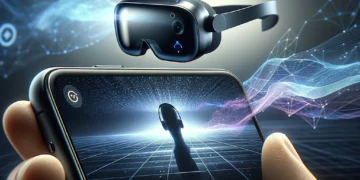
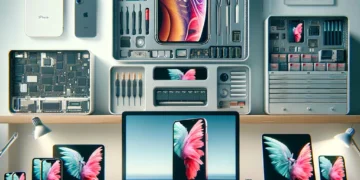







Apple has unveiled a significant update that will make nearly every iOS app automatically available on the Apple Vision Pro store by default. This move is aimed at providing early adopters of Apple’s mixed-reality headset with access to a vast array of applications, including “hundreds of thousands of iPad and iPhone apps.” These iOS apps will complement the official Vision Pro apps that are expected to debut on the platform.
While most apps can function seamlessly on the Vision Pro, users should not expect a wholly immersive futuristic experience. Instead, the apps will appear on the headset as they would on a smartphone or tablet, albeit displayed on a virtual screen in front of the user. Apple has assured that “app experiences can easily extend to Apple Vision Pro from day one — with no additional work required.”
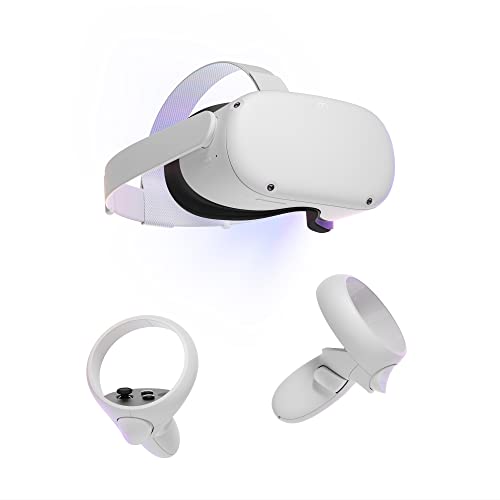
Meta Quest 2 — Advanced All-In-One Virtual Reality Headset — 128 GB
Despite the lack of full immersion, this development holds substantial advantages. For instance, it ensures that every streaming app will be readily available upon launch, offering users the opportunity to enjoy a wide range of content on the headset’s virtual screen. Notably, this screen can provide a viewing experience equivalent to a massive 100-foot-wide screen, enhancing the appeal of activities like lightsaber battles in Ahsoka or any other immersive content. When combined with the headset’s comfortable lightweight design, it creates an enticing entertainment platform, especially as uniquely tailored streaming apps begin to emerge.
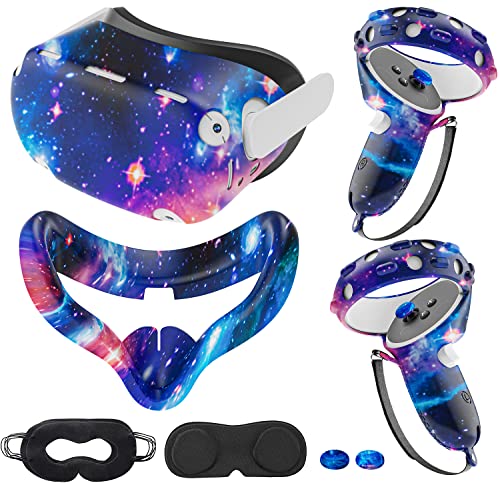
Compatible with Oculus Quest 2 Accessories, for Quest 2 VR Silicone face Cover, VR Shell Cover,for Quest 2 Touch Controller Grip Cover,Protective Lens...
From a developer’s perspective, a visionOS beta is set to launch in the coming fall. This will enable developers to test their apps for compatibility with the Vision Pro and make necessary adjustments to enhance integration with the headset. The toolset will also provide insights into app eligibility, ensuring a smooth transition for most applications.
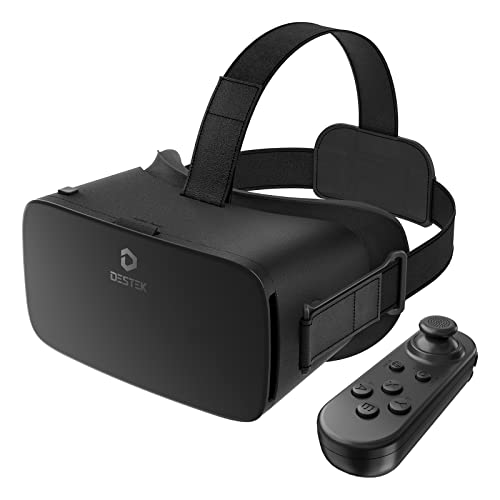
DESTEK V5 VR Headset for Phone with Controller, Anti-Blue HD Lenses 110°FOV Virtual Reality Headsets, VR Goggles for iPhone 13/12/11/SE/XR, Samsung, Android...
So, why is Apple taking this approach? The Apple Vision Pro is expected to cater to a niche market, primarily due to its hefty price tag and limited use cases, at least in its initial iteration. By incorporating a wide range of iOS apps, Apple can inflate the app store’s offerings and appeal to a broader consumer base. Additionally, it could exert pressure on larger developers like Meta to introduce features exclusively for the Vision Pro. In essence, this move addresses the perennial demand for backward compatibility in the tech industry, providing a bridge between established iOS applications and the cutting-edge Vision Pro headset.
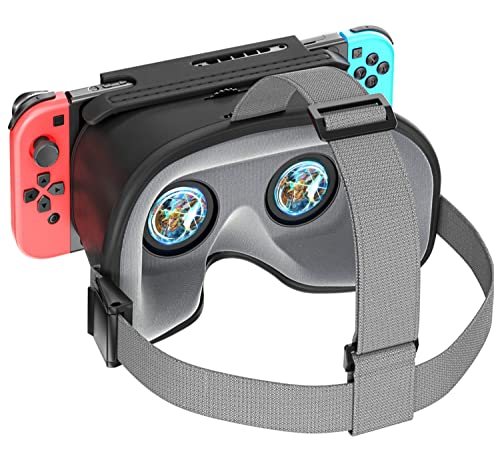
Switch VR Headset Compatible with Nintendo Switch & OLED, Upgraded with Adjustable HD Lenses, Virtual Reality Glasses for Original Nintendo Switch & Switch...
For those unfamiliar with the Apple Vision Pro, it represents the company’s upcoming mixed-reality headset. It boasts advanced features such as eye-tracking for precise control and an OLED exterior screen that displays digital representations of the user’s eyes for interactive interactions. However, it comes with a substantial price tag of $3,500, equivalent to the cost of seven Meta Quest 3 VR headsets, making it a noteworthy investment for tech enthusiasts.