





![Apple Watch SE (2nd Gen) [GPS 40mm] Smartwatch with Starlight Aluminum Case with Starlight Sport Band S/M. Fitness & Sleep Tracker, Crash Detection, Heart Rate Monitor](https://www.tech-bit.com/wp-content/uploads/2024/06/applewatchse2ndgengps40mmsmartwatchwithstarlightaluminumcase-360x180.jpg)


![SAMSUNG Galaxy Buds Pro 2 [2022] (SM-R510) - (Gray)](https://www.tech-bit.com/wp-content/uploads/2023/10/samsung-galaxy-buds-pro-2-2022-sm-r510-gray-360x180.jpg)













![Apple iPhone 15 Pro (128 GB) - Black Titanium | [Locked] | Boost Infinite plan required starting at $60/mo. | Unlimited Wireless | No trade-in needed to start | Get the latest iPhone every year](https://www.tech-bit.com/wp-content/uploads/2023/10/apple-iphone-15-pro-128-gb-black-titanium-locked-boost-infinite-360x180.jpg)
![Apple Watch Series 9 [GPS 41mm] Smartwatch with Pink Aluminum Case with Pink Sport Band M/L. Fitness Tracker, Blood Oxygen & ECG Apps, Always-On Retina Display](https://www.tech-bit.com/wp-content/uploads/2023/10/apple-watch-series-9-gps-41mm-smartwatch-with-pink-aluminum-case-with-pink-360x180.jpg)
























Thunderbolt 5: the Next Revolution in Connectivity
As we navigate through 2026, the technology landscape continues to evolve at a breathtaking pace. Among the most significant advancements is Thunderbolt 5, Intel’s latest iteration of its high-speed connectivity standard. This groundbreaking technology promises to reshape how we interact with our devices, offering unprecedented data transfer speeds and capabilities that seemed like science fiction just a few years ago.
Understanding Thunderbolt 5 Technology
Thunderbolt 5 represents a quantum leap in connectivity technology. Building upon the foundation laid by its predecessor, Thunderbolt 4, this new standard delivers bidirectional bandwidth of up to 80 gigabits per second (Gbps). In specific use cases, particularly for video-intensive applications, it can achieve speeds of up to 120 Gbps in one direction using Bandwidth Boost technology.
To put this in perspective, Thunderbolt 5 offers double the bandwidth of Thunderbolt 4, which maxed out at 40 Gbps. This dramatic increase enables users to connect multiple high-resolution displays, transfer massive files in seconds, and power demanding peripherals without compromise. The technology maintains backward compatibility with previous Thunderbolt generations and USB standards, ensuring that your existing devices remain functional while you transition to this new ecosystem.
The physical connector remains the USB-C form factor, making it familiar and convenient for users already accustomed to modern device connectivity. However, beneath this familiar exterior lies a completely reimagined data transfer architecture that leverages PAM-3 signaling technology, allowing for more efficient data transmission over the same cable infrastructure.
Performance Capabilities and Real-World Applications
The performance metrics of Thunderbolt 5 translate into tangible benefits for various user groups. Content creators working with 8K video footage can now transfer an hour of raw footage in mere minutes rather than waiting hours. Gamers can connect to external GPU enclosures with minimal latency, effectively transforming lightweight laptops into powerful gaming machines.

For professionals in creative industries, Thunderbolt 5 enables simultaneous connection of three 4K displays at 144Hz or multiple high-resolution monitors without any performance degradation. The technology also supports daisy-chaining up to six devices from a single port, creating cleaner workspaces and reducing cable clutter significantly.
Data center professionals and enterprise users benefit from faster backup solutions and more efficient network storage access. A full system backup that previously took hours can now complete in a fraction of the time, improving productivity and reducing downtime. The increased power delivery of up to 240 watts also means that devices can charge faster while simultaneously handling data-intensive tasks.
Compatible Devices and Ecosystem Development
As of 2026, the Thunderbolt 5 ecosystem is rapidly expanding. Major manufacturers including Dell, HP, Lenovo, and Apple have begun integrating Thunderbolt 5 ports into their premium laptop and desktop offerings. The first wave of compatible devices hit the market in late 2024, and adoption has accelerated significantly throughout 2025 and into 2026.

Peripheral manufacturers have also embraced the standard enthusiastically. External storage solutions from Western Digital, Samsung, and Seagate now feature Thunderbolt 5 connectivity, offering read and write speeds that saturate the interface’s impressive bandwidth. Monitor manufacturers like LG, Dell, and ASUS have released displays specifically designed to leverage Thunderbolt 5’s capabilities, featuring built-in hubs that transform a single cable connection into a complete workstation setup.
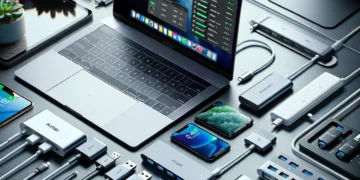
The docking station market has seen particular innovation, with companies producing Thunderbolt 5 docks that serve as comprehensive connectivity hubs. These devices typically include multiple USB ports, Ethernet connections, SD card readers, and audio jacks, all powered through a single Thunderbolt 5 cable that also charges the connected laptop at full speed.
Comparing Thunderbolt 5 to Previous Standards
When comparing Thunderbolt 5 to its predecessors and competing standards, the advantages become immediately apparent. Thunderbolt 3 offered 40 Gbps bidirectional bandwidth, which Thunderbolt 4 matched while adding improved minimum specifications and security features. Thunderbolt 5 doubles this baseline performance while introducing Bandwidth Boost for asymmetric applications.
Against USB4 Version 2.0, which also claims 80 Gbps speeds, Thunderbolt 5 maintains Intel’s tradition of stricter certification requirements. This ensures consistent performance across all certified devices, whereas USB standards often leave implementation details to manufacturers, resulting in variable real-world performance.
The power delivery improvements are equally significant. While Thunderbolt 4 supported up to 100 watts of power delivery, Thunderbolt 5 doubles this to 240 watts when used with appropriate cables and power supplies. This advancement means even the most power-hungry laptops can receive full charging speeds through a single cable while simultaneously driving multiple displays and peripherals.
Future Implications and Industry Impact
The introduction of Thunderbolt 5 has far-reaching implications beyond simple speed improvements. The technology enables new use cases that were previously impractical or impossible. Virtual reality and augmented reality applications benefit from the reduced latency and increased bandwidth, enabling higher resolution headsets with more immersive experiences.
In professional environments, the ability to connect powerful external GPUs with minimal performance loss means that organizations can deploy thin and light laptops as standard equipment while still providing employees with workstation-class performance when needed. This flexibility supports hybrid work models and hot-desking arrangements without compromising computational capabilities.
The medical and scientific communities stand to benefit substantially as well. High-resolution imaging equipment, data acquisition systems, and analysis tools can now interface with computers at speeds that enable real-time processing of previously unwieldy datasets. Research workflows that once required specialized workstations can now run on more portable and versatile systems.
Looking forward, Thunderbolt 5 establishes a foundation for the next generation of computing experiences. As artificial intelligence applications become more demanding and data-intensive, having robust, high-bandwidth connectivity becomes increasingly critical. The standard positions Intel and its partners well for these emerging challenges.
Adoption Considerations and Practical Advice
For consumers and businesses considering adopting Thunderbolt 5, several factors warrant consideration. First, evaluate your actual bandwidth requirements. While Thunderbolt 5 offers impressive specifications, users with modest needs may find Thunderbolt 4 or USB4 sufficient for several more years. The premium pricing associated with early adoption of cutting-edge technology may not justify the investment for all use cases.
However, creative professionals, gamers, and power users will find immediate value in upgrading. The ability to work with higher resolution content, connect more displays, and transfer data faster directly translates into time savings and improved workflows. For these users, Thunderbolt 5 represents a worthwhile investment that will remain relevant for years to come.
When purchasing Thunderbolt 5 devices and accessories, ensure proper certification. Look for the Thunderbolt 5 logo and verify specifications with manufacturers. Not all cables are created equal, and using substandard cables can limit performance or even pose safety risks, particularly when dealing with high power delivery.
Consider your ecosystem holistically. Investing in a Thunderbolt 5 laptop makes little sense if all your peripherals use older standards. Plan your upgrade path strategically, perhaps starting with a new computer and high-quality dock, then gradually adding compatible peripherals as needed and as prices decrease over time.
Conclusion
Thunderbolt 5 represents a significant milestone in connectivity technology, offering performance levels that enable new possibilities across consumer and professional applications. With 80 Gbps bidirectional bandwidth, 120 Gbps Bandwidth Boost capability, and 240-watt power delivery, this standard removes many bottlenecks that have constrained computing workflows. As the ecosystem matures throughout 2026 and beyond, Thunderbolt 5 will increasingly become the connectivity standard of choice for demanding users who refuse to compromise on performance. While you’re at it, why not check out the Tech Bits Earbuds: Your Complete 2026 Guide for an audio upgrade? Whether you are a content creator, gamer, scientist, or business professional, understanding Thunderbolt 5’s capabilities helps you make informed decisions about your technology investments and prepares you for the future of high-performance computing.